

Hoi An
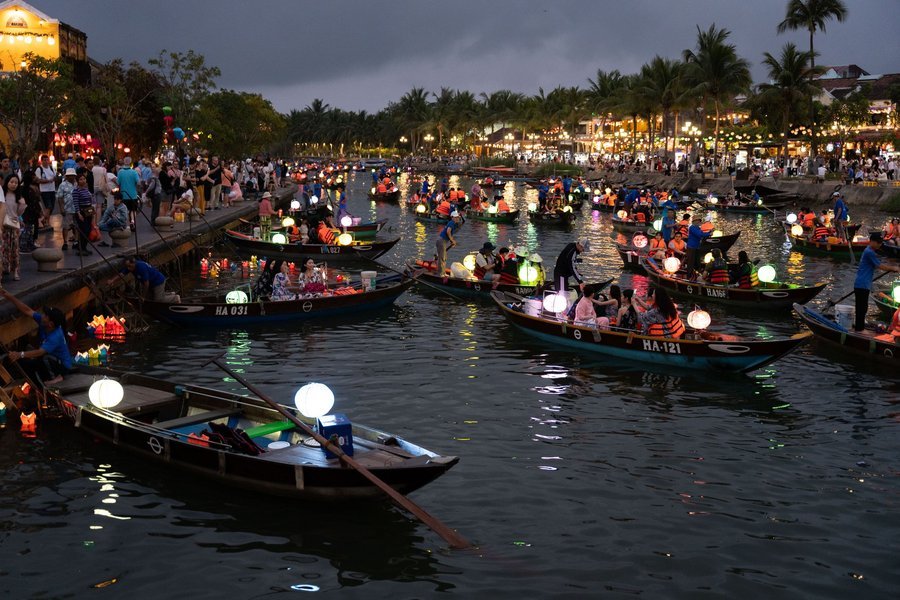
A trading port from the 15th to the 19th century, where Japanese, Chinese and European merchants met. The old town is a UNESCO World Heritage site and is closed to cars, so it is walked or cycled.
Highlights
- The old town in the evening, when silk lanterns are lit along the Hoai River
- The Japanese Covered Bridge, assembly halls and merchant houses still lived in by the same families
- Tailors and leather workshops, with clothes made to measure in a day or two
- Basket boats in the Cam Thanh coconut forest, and the market gardens of Tra Que
- My Son, the brick towers of the Cham kingdom, about an hour away and also UNESCO-listed
- An Bang and Cua Dai beaches, a short cycle from town
Best time to visit
February to July is dry. From October to November the river can flood the old streets; December and January are cooler.
Getting there
45 minutes from Da Nang airport. Hue is about 3 hours by road over the Hai Van Pass.
How long to stay
Three to five days, which gives time for the beach and My Son as well as the old town.
Where to stay
The old town is the most convenient but busiest; An Bang and Cua Dai have beach resorts ten minutes away, and the rice-field lanes between the two have small boutique hotels with pools.
What to eat
Cao lau, made only with water from a local well, white rose dumplings, com ga Hoi An and banh mi from the town’s well-known bakeries.
Good to know
- Since 1 July 2025 Hoi An is a ward of Da Nang City rather than part of Quang Nam province.
- The lantern festival falls on the 14th day of each lunar month, roughly 6–10 PM, when lights along the river are switched off.
- January to May is cool and dry, about 18–23°C; October to December brings rain and the occasional flood.
Combine with
Tours that visit Hoi An
Questions about Hoi An? Message us on WhatsApp +84 345 827 501 or email booking@hynatravel.com.